
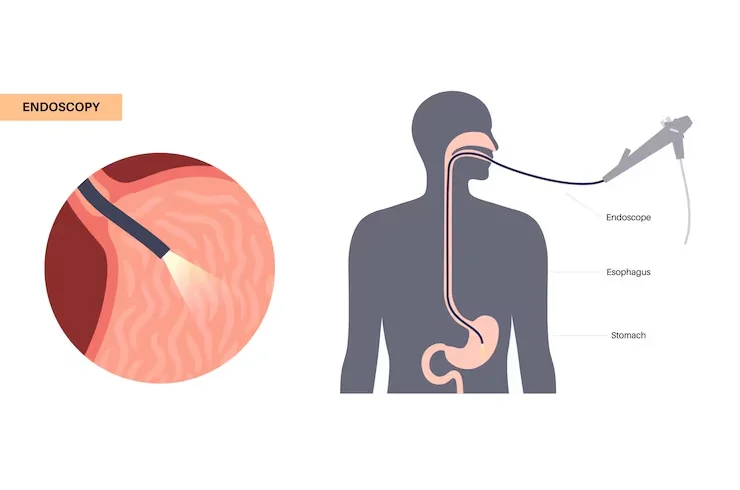
Upper gastrointestinal (GI) endoscopy is a medical procedure used to examine the lining of the oesophagus, stomach, and the first part of the small intestine. A thin, flexible tube with a camera is passed through the mouth to help identify abnormalities, investigate digestive symptoms, and perform certain treatments when required.
Diagnostic upper GI endoscopy helps evaluate symptoms such as persistent upper abdominal pain, difficulty swallowing, unexplained vomiting, gastrointestinal bleeding, and suspected ulcers. Therapeutic procedures may include band ligation or sclerotherapy to treat bleeding blood vessels, removal of swallowed foreign bodies, and testing for Helicobacter pylori (H. pylori), a bacterium associated with stomach inflammation and peptic ulcers.
The procedure is generally performed with appropriate preparation and sedation when indicated. Recovery and aftercare depend on the findings and any treatment performed.